


Plenty of sides have come through the Championship in its history and throughout the decades there have been some brilliant club badges used by the teams.
We will look at ten badges used by teams in the second tier’s existence, explaining the stories behind them and how they have captured the attention and hearts of fans from around the country. In no particular order, here is the top ten most beautiful logos in Championship history.
A club must have used this badge on their shirts during a Championship season to be eligible to make this list.
Leeds United (1996 – present)

Leeds United have had plenty of iconic badges over their time, with the Yorkshire Rose badge of 80’s and early 90’s as well as the ‘LU’ badge during their final years under Don Revie’s leadership. Both have taken on a new role in Leeds, being used to decorate broadband cabinets and electricity boxes across the City thanks to the ‘Burley Banksy’ and with the latter making a reappearance on the club’s away kits this season.
However, it is the badge’s current shield design that has been a longstanding symbol of the club, to bring it more in line with European club’s badges at the time as the Elland Road club embarked on their continental adventures throughout the early years of its adoption.
The badge itself has all the hallmarks it needs: The White Rose, naturally as the club represents the proud people of Yorkshire, and inscribing the ‘LUFC’ font used by the Leeds team that won the FA Cup and frequently challenged at the top of English football under Revie and stars like Billy Bremner, Eddie Gray and Norman Hunter.
It has stuck about for the next quarter of a century, with minor tweaks here and there, alongside a special centenary badge in 2019. It also survived being replaced by that travesty of a badge proposed by the club in 2018 before swift backlash shut down that attempt very, very quickly.
Bristol City (2019 – present)
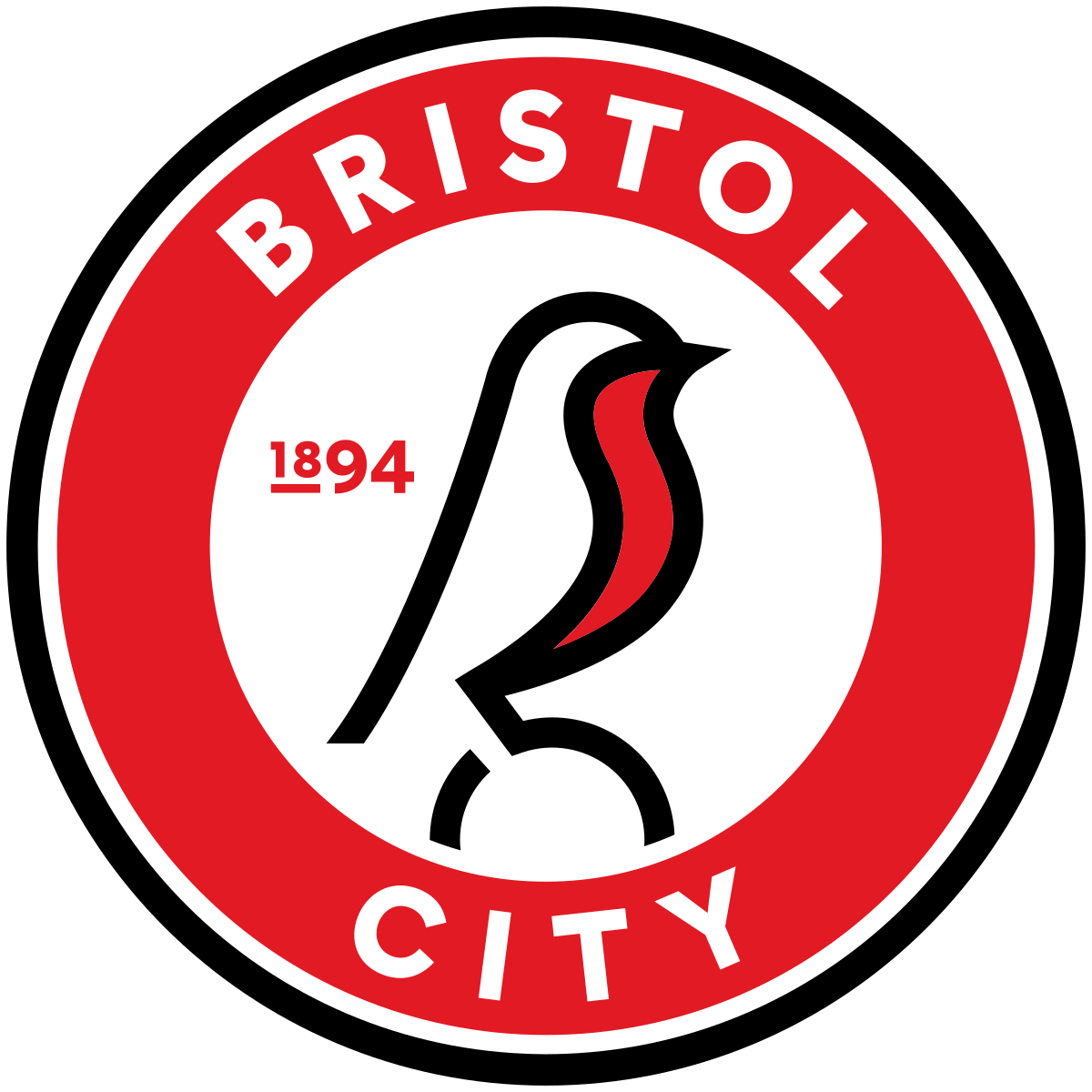
Circle designs are becoming all the rage these days, with Brentford, Manchester City, Stevenage, Stockport County and countless others now using the template as their new identities. Whilst many of these become subject to criticism for turning football into a more internationally marketable sport, occasionally, clubs do get it right.
Bristol City were one of many clubs stuck with an unremarkable coat of arms badge throughout recent history an whilst it definitely did its job to reflect its place of origin by doing that, it blended into and was outclassed by many of the other clubs doing the same.
In 2019, City swapped to their new circular badge, better reflecting the club’s identity of ‘The Robins’ by bringing a return of the bird to their badge, last seen in 1994 in a brilliant design in of itself which made a brief return on the third shirts in 2018.
This new logo also does the job of correcting the club’s establishment date, reflecting when the side was founded in 1894 rather than when they adopted the name of Bristol City in 1897.
Sunderland (1997 – present)

The Black Cats adopted their current design in 1997 as they made the switch from Roker Park to the Stadium of Light and has become an instant classic, conjuring up images of their iconic Sunderland players of recent years such as Kevin Phillips, Jermaine Defoe and Niall Quinn.
It does the best job of any club to represent the city they play in and are adored by, with the use of the Penshaw Monument and the Wearmouth Bridge in gold in two sections of the crest. The rampant black cats prop up the badge and emblazoned on the top is a colliery wheel, reflecting the rich mining heritage of County Durham and the North East as a whole.
It could be argued that the only thing missing from this badge is the ship seen in their previous crests, but it does come with the question of if that would be putting too much on the badge. Nevertheless, the club have taken steps to address this by the reintroduction of their previous badge on this season’s away kit.
Sheffield Wednesday (1999 – 2016)

Whilst this recent round of badge changes have brought about some good redesigns, a few have fallen short of the mark. Whilst certainly a throwback to the badge of the 60’s, the current badge used by Sheffield Wednesday does feel like it doesn’t live up to its predecessor.
The minimalist badge used throughout the 1970s until the mid-1990s was an iconic and beloved badge for the Hillsborough side, and after a brief failure with their next update, they reverted back to that owl design with the shield surrounding it the only remaining trace of the previous badge. The use of their establishing date emphasises the club’s rich history and the fifth oldest professional football club in England. This merging of the beloved past badge and the trend to put shields around the logo made it a very strong badge in the Championship.
Swansea City (1998 – 2021, 2023 – present)

Minimalism can bring some of the best badges about as seen with Sheffield Wednesday and Swansea City is another case in point for that. The four brush strokes form the club’s nickname as ‘The Swans’, evoking memories of the badges from the mid-’70s to mid-’80s. Arguably it has gained more iconography as the club ascended into a Premier League semi-regular, however was not present for their 2013 EFL Cup final win, instead using a special centenary badge on the day at Wembley.
The design was replaced in 2021 as the club once again tried to reimagine a previous badge, this time the badge from 1992 to 1995, however replacing the sky blue colour within the circular badge with black. However, this was quickly panned and the sky blue was reinstated, but once again the old badge returned after a 2-year hiatus, with minor tweaks. It is certainly one of the more unique badges in the Championship and English football as a whole.
Blackburn Rovers (1989 – present)
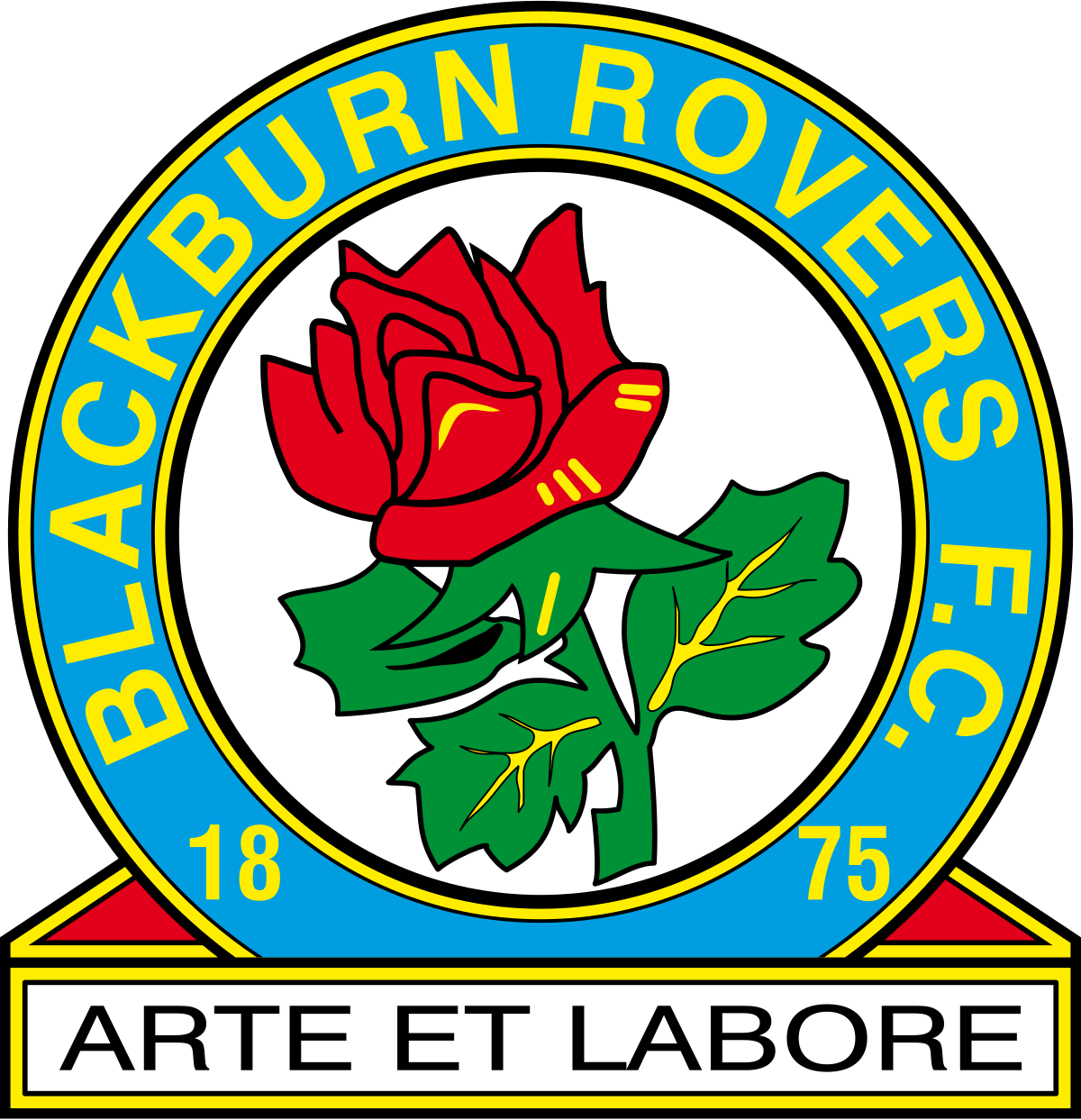
Blackburn Rovers, despite being one of the most historic clubs in English football, did not even use an official badge on their shirts until 1974, instead only using the town of Blackburn’s coat of arms in FA Cup finals. After issues with visibility around their red rose badge, the club updated their badge to the one everyone is familiar with today, which had been in use in some areas of Ewood Park already.
The Red Rose is the staple of this badge, attached to a stem to reflect the club’s strong Lancashire roots and perhaps as a shot towards their Yorkshire rivals’ badges, which instead opt to only use the flower. It sits above the club’s motto of “Arte Et Labore”, meaning By Skill and Hard Work. The logo has been tweaked slightly during its time in use, making the blue much more brighter and changing the font colour to yellow.
West Bromwich Albion (2022/23 season only)

West Bromwich Albion‘s current badge started its life in 2008, with one very happy song thrush sat on some hawthorns. It was a much sleeker and smoother design than its predecessors and is all around a brilliant badge. However, in 2022, the club made a decision to bring back the badge they used in 1975 to 1986 on their home, away and third shirts, with help from fan consultation.
The simple letters design calls back to a long-forgotten era for younger fans of the West Midlands side and just seemed to fit perfectly on the shirts that season. It was met with universal adoration by The Baggies fanbase and frankly, it is a shame that they did not copy Liverpool’s stance of continuing to use their historical badge on the kit whilst using their current crest across the rest of the business.
Manchester City (1997 – 2016)

For newcomer fans to English football, it would be hard to believe that Manchester City were frequent competitiors in the second tier. As they were unable to trademark their previous badge, the East Manchester club made a new design for the 1997 campaign, making a very unique badge shape with the use of a golden eagle, an old symbol of Manchester, sat behind the city’s coat of arms in the club’s sky blue colours.
The ship represents the Manchester Ship Canal, the great innovation that allowed the city to export their own produce and mainly as a middle finger to bitter archrivals Liverpool who used to benefit from that trade. Underneath the club’s initials are the three stripes representing the city’s three rivers of the Irwell, Irk and Medlock, the latter of which passes by the club’s new home in Beswick.
The club replaced the badge in 2016 with a modern, more circular update on previous badges of the ’60s up to the early 90s, and arguably kicked off the global trend of circular badges through their fellow City Group clubs copying the same design once adopted. However, the old badge is sorely missed and with the club’s willingness to bring back retro kits in recent years, perhaps the badge may reemerge on the kits sometime in the future.
Norwich City (1940 – 2023)

A longstanding badge of football history, Norwich City did not change their badge for 83 years, with just one tweak to change the colours and a few minor details in 1972. The badge had its charms, from the canary symbolising the club standing proudly on a football, and of course its strangely shaped and faced lion in the top left corner, which has its own charm.
The club refined their badge in line with their 120th anniversary and was a fairly divisive switch. Whilst certainly improving on the lion and castle symbols and removing the black border in favour of gold, the ‘cyber canary’ feels like a step backward in quality. As retro badges have become more popular across football, it would be very pleasant to see the club’s badge from the 1920s and ’30s make an appearance on a shirt in the near future, which in of itself is a brilliant design.
Coventry City (1983 – present)

Let’s start with the obvious. Coventry City‘s badge has an elephant. Standing on a football. What is there not to love about that? The original version of the crest was adopted in the 1980s as part of Jimmy Hill’s rebranding legacy from The Bantams to the Sky Blues. The design succeeded in bringing more of the City’s coat of arms into the picture, adding the eagle and phoenix to the Elephant, which holds Coventry Castle upon its back.
There have been a few minor revisions since then, with the strangest coming in 2010 when the club opted to remove the green grass from the badge to save printing costs according to local legend. It, like Leeds’ badge, survived an attempted replacement in 2005, which would have seen all of its tradition replaced by a modern shield and a minimalistic elephant being the only remaining trace of the club’s previous crests and incidentally a perfect representation of graphic design in the mid-2000s.

