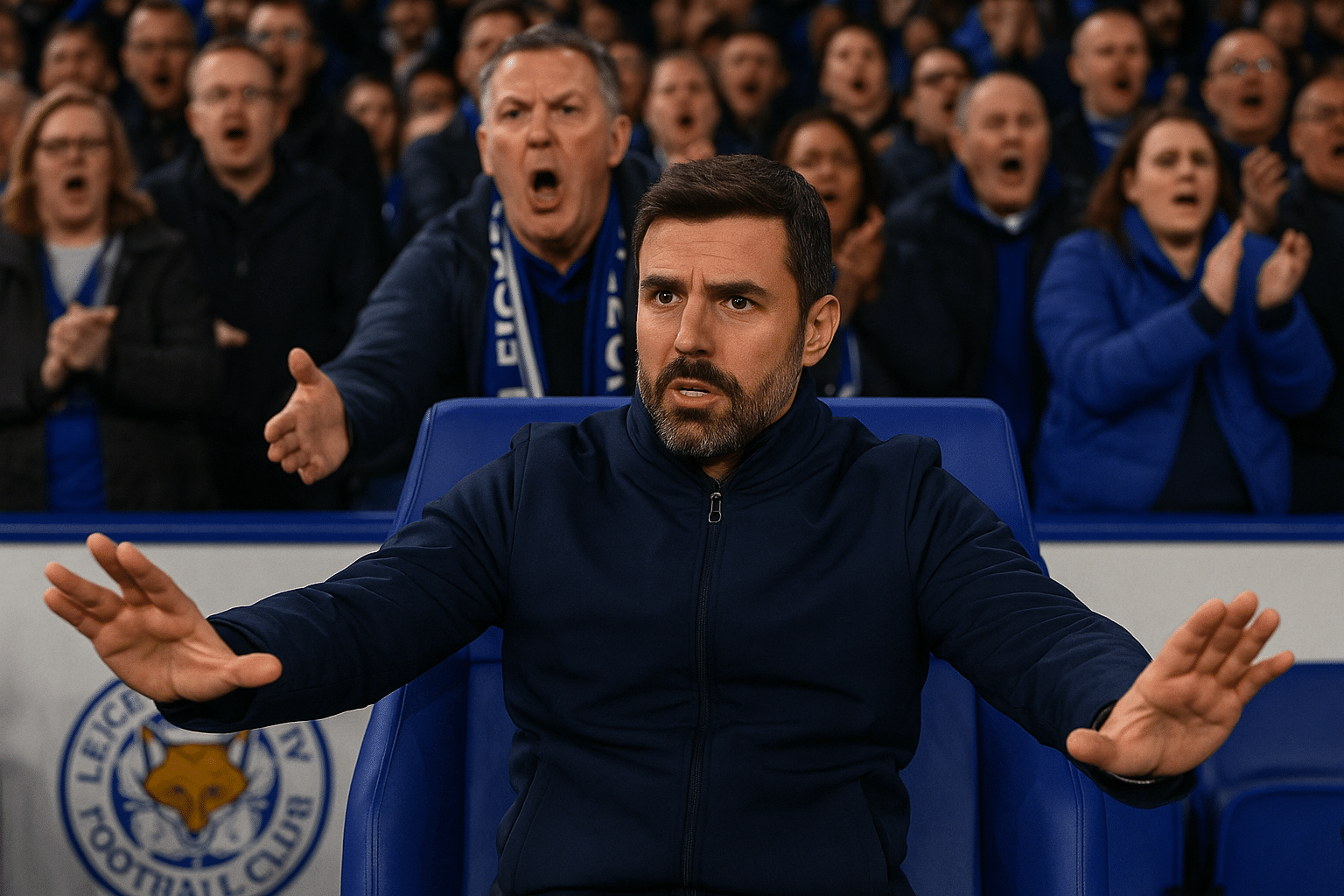
Introduction to Leicester City’s Historic Premier League Victory
On the 2nd of May 2016, football’s greatest underdog story was completed. Chelsea drew 2-2 with bitter London rivals Tottenham Hotspur in the infamous ‘Battle of the Bridge’, which ultimately clinched the Premier League title for Leicester City, widely tipped as relegation favourites at the beginning of the season, their first major trophy in history. But to tell the story of how Leicester beat the 5000-1 odds stacked against them, you have to go back three years.
Setting The Scene: Pre-2016 Expectations
On the 12th of May 2013, Leicester were on the wrong end of one of the sport’s finest moments. After winning a penalty which could have sent them to the Championship play-off final, Anthony Knockaert had his penalty and rebound shot saved, only for Watford to go up the other end and score in the dying seconds of the game in the now immortalised “Hogg, Deeney” goal. Under Nigel Pearson, they bounced back from that heartbreak the following campaign, delivering one of the most dominant seasons seen in the Championship’s history by breaking the points record.
They went up to the Premier League and immediately found themselves in trouble, spending nearly five months from November to April at the bottom of the table. They looked certain to be down, but seven wins in their last nine matches saw them comfortably survive in 14th place. Pearson looked set to lead them into the following campaign, but an off-field incident during pre-season in Thailand led to the chairman sacking the former Sheffield Wednesday midfielder. To replace him, they recruited Italian manager Claudio Ranieri, who had previous Premier League experience with Chelsea.

The Underdog Story: A Brief Overview
Leicester and Ranieri were immediately met with scepticism. Journalists stated that the decision to appoint him was baffling, and he was the wrong man to keep Leicester in the Premier League. The odds of them winning the top flight were astronomically high, going as high as 5000-1. They only made six incoming signings during the summer transfer window and sold two, in strikers Chris Wood and David Nugent.
Leicester’s squad cost was worth £71 million by the start of the season; by comparison, Manchester City spent £104 million in the summer of 2015 on Kevin De Bruyne and Raheem Sterling alone. It was expected that City, under Mauricio Pellegrino and reigning champions Chelsea, led by Jose Mourinho, would be the clear title favourites, whilst Leicester were considered favourites to be relegated.
It would not play out this way, with Leicester topping the table by the end of the first gameweek after beating Sunderland, and kept in touch with the top of the table throughout the early months. Spearheading their great start was Jamie Vardy, who was in the process of breaking a Premier League record of most goals in consecutive matches. Between him and winger Riyad Mahrez, Leicester were firing on all cylinders.
Heading into winter, summer signing Ngolo Kante emerged as one of the league’s best midfielders, and it was the turn of the defence, led by captain Wes Morgan, Robert Huth and keeper Kasper Schmeichel, to earn their plaudits, keeping clean sheets in crucial matches to keep their momentum alive. Leicester took the top spot in December against Swansea City, before falling behind Arsenal with a loss to Liverpool and a draw to Man City.
They did not look back after January and kept hold of their key players like Mahrez and Vardy and extended their gap to the chasing pack, led by Spurs. March was the month that people started to believe they could do it, with a crucial Mahrez goal against Watford keeping their ambitions alive and essentially booking their place in the Champions League regardless of what would happen next. They kept up their blistering pace and after failing to secure the title against Manchester United at Old Trafford, it was Chelsea that gave the fairytale its happy ending.
They finally got their hands on the trophy in their final home game of the season after beating Everton, serenaded by their fans and by a close friend of Claudio Ranieri, singer Andrea Bocelli.
The Key Figures of Leicester City’s Triumph
Claudio Ranieri: The Mastermind Manager
It was a brilliant story for Ranieri personally as well. Just eight months prior, he was at his lowest point in his career. He was the manager of Greece and lost his job just a handful of months into his tenure after losing to European minnows, the Faroe Islands. Leicester appointed him in the wake of Nigel Pearson’s sacking and immediately set himself apart from his predecessor with a happy-go-lucky attitude, frequent rewards for his players and positive energy with the media.
Innovative Tactics and Strategies
Ranieri was known for his adaptability and formation switches, earning the nickname of ‘Tinkerman’. But it was simple tactics that won Leicester the Premier League. He played a 4-4-2 and preferred to counterattack with speed and energy, and did not allow his players to rest. Describing his tactics, the Italian said:
“Some complain that Leicester lose too many balls. But that’s only natural, when your team plays at the speed of light. Spectators like us because we create many scoring chances.
“I give my strikers freedom to attack and cut across the lines, as long as we immediately return to a 4-4-2 as soon as the ball is lost. I always tell them: ‘Remember that I am Italian, we must know how to defend before anything else’.”
Leadership Style and Influence
Leicester had a key core of players to rely on in addition to Claudio Ranieri. Whilst the Italian was a great motivator in his own right with frequent treats, players like Wes Morgan were instrumental in setting the standards on the pitch.
The Winning Squad: Players Who Made History
There were plenty of players to make their mark on this extraordinary season, but there were a few who had major impacts. Wes Morgan and keeper Kasper Schmeichel played every single minute of Leicester’s Premier League season, and Jamie Vardy was the club’s top scorer with 24 goals. Riyad Mahrez and N’Golo Kanté were also crucial figures. Other players who were regular starters in the Foxes’ league squad included: Robert Huth, Marc Albrighton, Shinji Okazaki, Christian Fuchs, Danny Simpson and Danny Drinkwater.
Jamie Vardy: From Non-League to Premier League Hero
In 2012, Jamie Vardy was playing for non-league side Fleetwood Town. He had spent his career up until that point playing at a semi-pro level, and spent time making medical splints alongside his football. For him to become a Premier League champion just four years later is a remarkable story in its own right. Making his Premier League debut the season before at 27, Vardy has been one of the unlikeliest success stories in football, and a Premier League icon in his own right with 145 goals in the top flight.
Riyad Mahrez: The Creative Force
Riyad Mahrez joined Leicester from French side Le Havre in 2014, having initially thought that it was a Rugby club before signing with the Foxes. He made a limited impact in his first six months as the club were promoted, but stepped up once the team entered the Premier League with four goals and three assists in 30 appearances. The following season is when the Algerian made his mark on world football, becoming the key creative driver behind Leicester’s title win. He recorded 17 goals and 11 assists, earning himself the PFA’s Player’s Player of the Year award as a result.
Essential Defensive Players
Whilst the forward players earned their plaudits from pundits and fans alike, the unsung heroes of this season were their defenders. Their captain, Wes Morgan, played every single minute of the season for the club and got his place in the Premier League Team of the Season. Kasper Schmeichel was the other player who featured for the club in all 38 matches and kept 14 clean sheets in the process. Without them, they would have surely fallen short of winning the title.
Tactical Innovations and Strategies
The Tactical Setup: Formations and Flexibility
Premier League managers’ tactics were beginning to shift by the time Leicester won the league. The 4-4-2 was becoming less and less used, with front threes and back fives starting to emerge. However, Ranieri stuck with the tried and tested method, but allowed fluidity when his side went forward, a big factor behind their 68 goals scored across the season, which was only bettered by Spurs and Manchester City. They would tweak to a 4-4-1-1 when out of possession, keeping them ready to strike on the counter with incredible efficiency. It was a stark contrast from Nigel Pearson’s time in charge, who used 11 different formations in the season before.
Key Tactical Changes During the Season
Ranieri did not do many tactical changes, but had his key men when chasing a result. The most important of those was Leonardo Ulloa, his supersub who contributed when either Okazaki or Vardy were unavailable. Andy King and Jeffery Schlupp were also often called upon to reinforce the midfield should fatigue have set in.
Efficiency and Minimal Changes: A Winning Formula
One of the most amazing factors behind Leicester’s title win was how much trust Ranieri put into his team. The Italian changed players in his starting lineup just 33 times, the second lowest for a Premier League champion behind Sir Alex Ferguson’s Manchester United side in the inaugural season back in 1992/93. Seven of his squad played over 3,000 minutes across the season, with Wes Morgan and Kasper Schmeichel playing all 3,420 possible minutes in the league. Ranieri used just 23 players across the whole season, fewer than any other side.
Cultural and Psychological Factors
Building Belief and Team Spirit
Ranieri knew how important building a positive spirit around his side could impact their season. He was already known to be a cheerful personality, perhaps the antithesis of his combative predecessor in Nigel Pearson. Even before the first game of the season against Sunderland, he began his techniques, employing local band and Leicester fans Kasabian to motivate his squad. He would regularly arrange meals and other motivational tactics during training, which led to the infamous “Dilly Ding, Dilly Dong” quote in March. He also was a master at relieving any pressure put on his side, and earned a new nickname in “King Claudio” for how he galvanised both the squad and the city. This mentality perhaps culminated on the night of the 2nd of May, when the squad gathered together to watch Chelsea vs Spurs and ultimately celebrate their title win when The Blues came back to draw.
The Role of Fan Support
Leicester City fans would never have believed what would happen to their club by the time the season started. But they backed their team from the first whistle against Sunderland until the final one against Chelsea at the end of May. They decked the streets in blue, got behind their squad and helped them over the line in situations where it could have crumbled, perhaps best displayed by Robert Huth’s late goal away at Tottenham in what would become a title showdown.
External Factors and Challenges Overcome
Financial Constraints and Smart Management
Leicester City simply put did not have the finances of other teams in the Premier League. They had a squad value of £71 million by the start of the season, far less of Manchester City, who had spent a combined £415 million to put their squad together. Indeed, their wage budget was only above that of Bournemouth and Watford’s by the time they were promoted the season prior. They were always up against it, but they never looked like the minnows against these other clubs. Ranieri’s tactics of lightning-fast counter-attacking football was near-unstoppable for much of the season, and their competitors just couldn’t stop them from scoring. It proved, above all else, that with the right tactics, anyone can have a chance of winning the Premier League.
Overcoming Mid-Season Challenges
The title-winning campaign was not always smooth sailing. Like many sides, Leicester began to falter in the winter months as fixtures became more congested. Leicester had lost just once in their opening seventeen games, but came undone at Anfield on Boxing Day to Liverpool under their new manager, Jurgen Klopp. They won just one of the five fixtures starting with that result, and saw them fall below Arsenal in the table. But during this time, they held firm, kept four clean sheets following the loss to Liverpool and reclaimed the top spot due to Arsene Wenger’s side stumbling. The Foxes went to The Emirates and lost the following month, but at that point they were uncatchable.
Competitive Landscape and Rivals
As mentioned, Arsenal were major rivals to Leicester in their title bid, and were just one of two sides, alongside Liverpool, to beat Ranieri’s side across the entire Premier League season. But in the end, it was their North London rivals in Tottenham that were the only team that could prevent the underdogs from reaching glory. Under Mauricio Pochettino, Spurs were a lethal and defensively solid force, led by Harry Kane, Christian Eriksen and Dele Alli, with the brilliant Belgian centre-back pairing of Jan Vertonghen and Toby Alderweireld at the heart of a defence that conceded a league joint-lowest of 35 goals. In the run-in, they dropped points in seven of their last eleven games, meaning Leicester could sail off into the distance and clinch the title with a ten-point buffer.
Comparisons with Other Premier League Winners
Leicester’s title win made them one of just six teams to lift the Premier League in the competition’s history since splitting away from the EFL in 1992. What made Leicester unique was that they came from out of nowhere to win the trophy. Arsenal and Manchester United are giants of English football and were always competitive, whilst Manchester City, Chelsea and Blackburn Rovers had major cash injections to reach their ambitions. Leicester’s owners were certainly rich but not on the same level as others; their squad was not the strongest, and their manager was discounted following his sacking to make way for Jose Mourinho at Chelsea in 2004. They became the ultimate underdogs and, against all the odds, disrupted the establishment of the Premier League in a way that has not been seen since.
Statistical Analysis: Points and Possession
Leicester ended the season on 81 points, making them the sixth-lowest points-scoring champions in Premier League history, with four of Manchester United’s triumphs and Arsenal’s first title in 1997/98 finishing below that tally. They also ended the season with the second-highest points jump from one season to the next, gaining 40 more points than their effort with Pearson the season before. However, their possession stats are perhaps the most revealing aspect of their season. Across 38 games, they had the majority of possession in only seven matches, highlighting how efficient their counter-attacking abilities and defensive acumen were to lose just three games all season. With a season average of 42.6% possession, they were only above Sunderland and West Bromwich Albion in that aspect.
Unique Aspects of Leicester’s Title Win
Penalties could be seen as a major part of how Leicester secured the title. They broke the record with 11 penalties won by the time they won the league, and scored nine of them. But the most important stat is the odds. No team has won a title from as high odds as Leicester did with 5000-1.
Impact and Legacy of Leicester City’s Title Win
The fact we still discuss Leicester City’s title win is evidence of the legacy it has had on Football as a whole. It proved that with the right squad and manager, anyone could challenge and win against the big clubs, and you didn’t have to throw hundreds of millions of pounds around to do it. It is the ultimate underdog story and one that is likely never to be repeated. The impact the squad and the result had on the club was immense. It gave them Champions League football for the first time, where they reached the Quarter-finals. It most importantly proved Leicester could win trophies, a feat they proved again when they won the FA Cup in 2021. However, this feat likely resonates due to how unique it was. Since then, no team has succeeded like Leicester. Manchester City began their dominance in the following years with heavy investment, with Liverpool and Chelsea also picking up titles.
Long-Term Effects on the Club and Community
The funds received by the club enabled Leicester to become persistent challengers for European football. Whilst the initial season after the title saw them plummet to 12th place in the Premier League, they would become a regular top-half team. Whilst many of their best players didn’t stick around, like Riyad Mahrez and N’golo Kante, the funds they raised from their transfers kept them competitive and to buy new stars like James Maddison and Wilfred Ndidi, as well as nurture youth talents like Harvey Barnes and Kiernan Dewsbury-Hall. The community benefited from the joy their team brought to them, and whilst recent years may not have been as kind to them, they still look back fondly on the season they conquered the country.
Influence on Future Premier League Seasons
Leicester’s title win emphasised that you could recruit brilliant talent for low fees. The signing of N’Golo Kanté is the best example, purchased for £5.6 million and within one season was named in the Premier League team of the season. Not since Arsene Wenger’s eye for talent like Patrick Vieira had the league seen such shrewd business pay dividends. Kante and teammate Mahrez moved to Chelsea and Man City in the following seasons, and stormed the league with their incredible talents, being pivotal parts of five different Premier League-winning sides since leaving.